Recovery: The Training Variable Almost Everyone Ignores
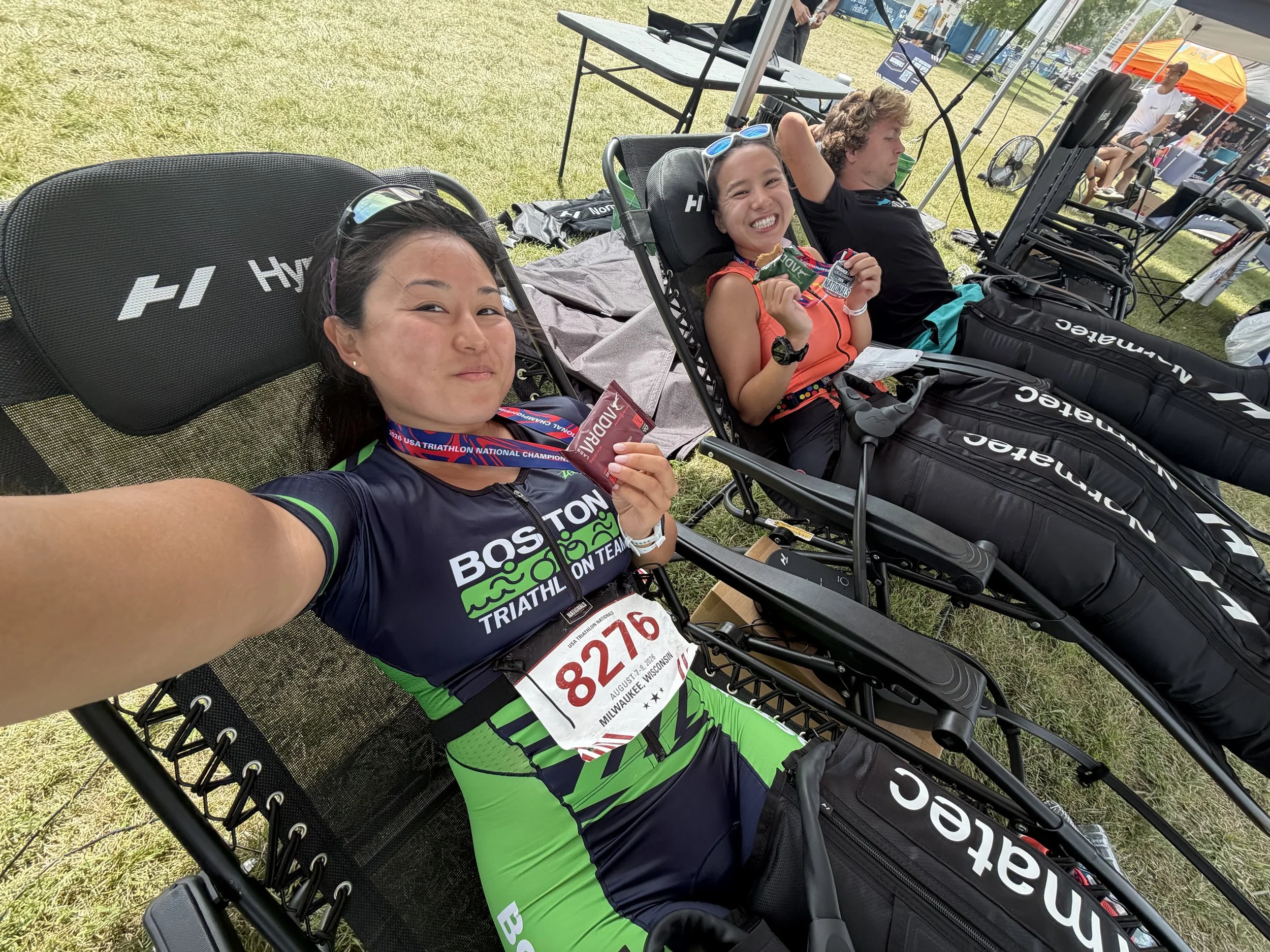
Recovery is the most commonly overlooked, misunderstood, and ignored component of training. It's not a reward for finishing a hard block and it's not optional — it's an integral part of the training program itself. That's especially true for the amateur athlete, who is managing training stress on top of work, family, sleep debt, and everything else life brings, all of which the body registers the same way.
This post covers two sides of the same coin: how to think about recovery as part of your everyday training, and specifically how long it actually takes to recover after an Ironman-distance race, which is longer and more individual than most athletes assume.
It's also worth saying plainly: recovery isn't just about the next race. Done well, it protects your health, your relationships, your work, and your ability to keep doing this sport for years — not just your finish time this season.
STRESS + REST= GROWTH
What stress actually does to your body
The body's reaction to stress is the same regardless of the source — training, work, emotional, or physical. When it encounters a stressor, the hypothalamus signals the adrenal glands to release adrenaline and cortisol: adrenaline raises heart rate and energy availability, and cortisol elevates blood sugar while suppressing non-essential functions like digestion, preparing the body for immediate action. Once the stressor passes, hormone levels gradually normalize and the body recovers. Chronic, unresolved stress keeps those hormones elevated and can contribute to high blood pressure, suppressed immunity, and mood disturbance.
The training implication is simple to state and easy to ignore: improvement happens during rest, not during the workout itself. Too much focus on stress and not enough on rest produces poor performance. Stress plus rest is what actually equals growth — and performance gains come from consistent, specific training accumulated over weeks, months, and years, not from fits and spurts.
Supercompensation and ramp rate
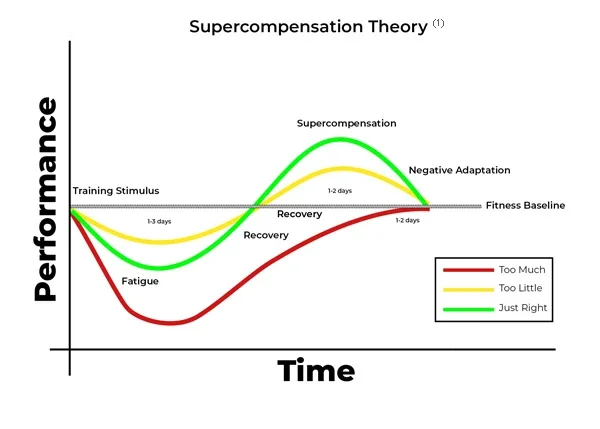
There's a concept underneath all of this worth naming directly: supercompensation. A hard training session or block creates a stimulus, and in the hours and days that follow, readiness temporarily dips below baseline — that's fatigue. With adequate recovery, the body doesn't just return to where it started; it rebounds above that baseline. That overshoot is the actual adaptation you were training for. It's the whole reason the dip has to happen at all.
Timing is what makes or breaks the cycle. Stack the next hard stimulus on top of the body before the rebound has occurred, and fatigue compounds on fatigue instead of adaptation building on adaptation — the path toward the under-recovery spectrum described below. Wait too long, on the other hand, and the supercompensation peak fades back toward baseline, which is simply detraining. The skill in periodization is landing the next stimulus near that peak, not guessing.
Ramp rate — how quickly training load increases week to week — matters for a related but distinct reason: injury risk. Research on training load monitoring has found that abrupt spikes in load relative to an athlete's recent training history are associated with meaningfully higher injury risk, while a gradually built, higher chronic training load can actually be protective (Gabbett, 2016). One commonly cited guideline places the ratio of recent to longer-term training load in a “sweet spot” of roughly 0.8 to 1.3, with ratios well above that range flagged as higher risk — though this is a directional guideline shaped by individual context, not a strict rule everyone must follow to the decimal.
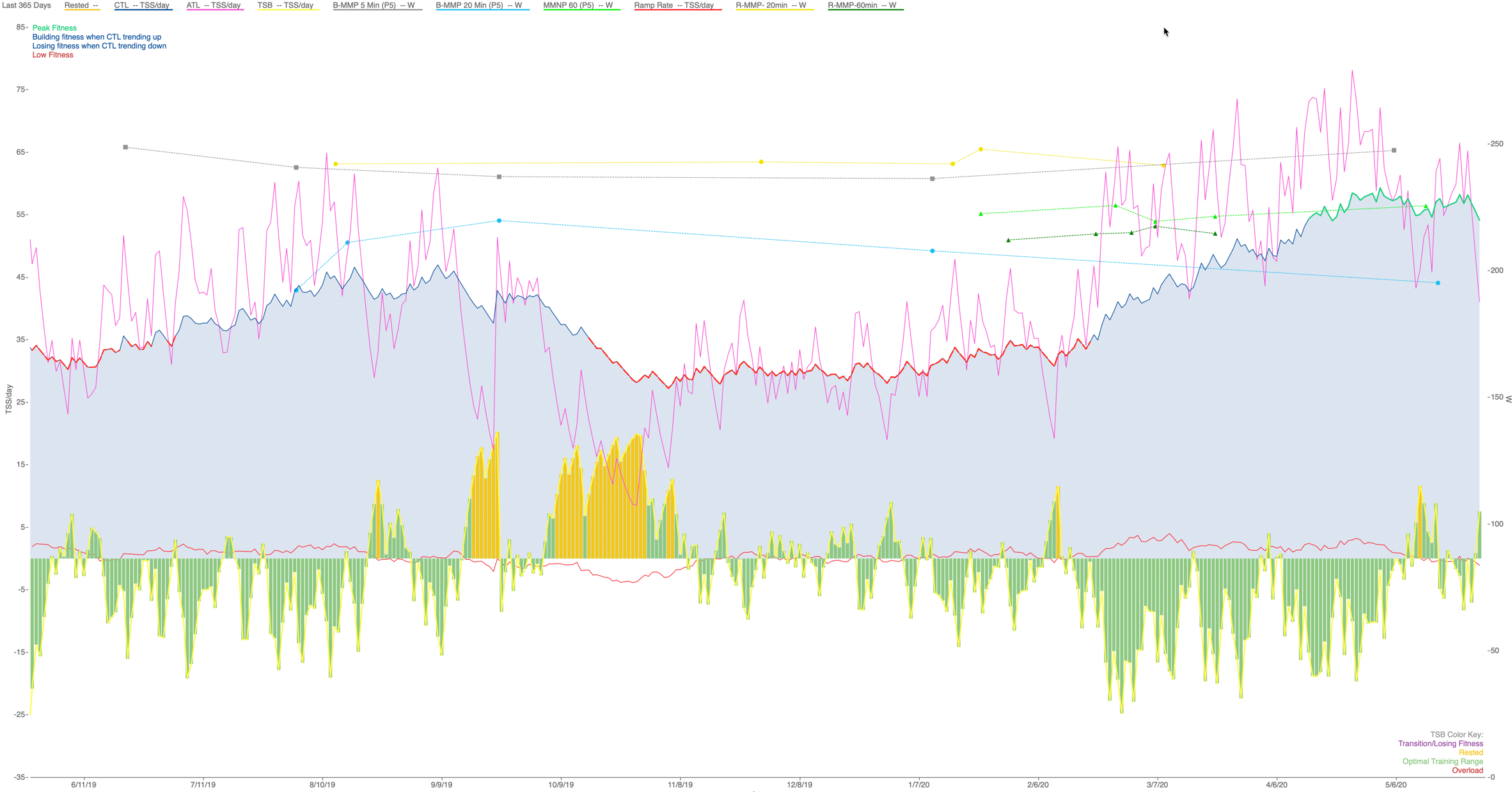
In practice: avoid doubling your weekly volume, build chronic tolerance gradually, and don't let a big week arrive as a shock to a body that hasn't been exposed to that kind of load recently. The dip after hard training is the point — but only if the rebound is allowed to happen, and only if the next stress doesn't ambush a system that's still catching up.
How long recovery actually takes after an Ironman
Most athletes judge “recovered” by how their legs feel walking down stairs. The physiological picture runs longer than that. A study that tracked 42 well-trained male triathletes through an Ironman — sampling blood two days before, immediately after, and at 1, 5, and 19 days post-race — found significant increases in markers of muscle damage (creatine kinase, myoglobin) and systemic inflammation (IL-6, hs-CRP) immediately after the race, with cortisol elevated and testosterone suppressed (Neubauer et al., 2008).
The authors' practical conclusion, based on the muscle repair and inflammatory processes they observed, was that at least two to three weeks of active recovery is advisable before returning to more intensive training — and that's for well-trained athletes racing under normal conditions. It's not unusual for it to take longer, particularly for less experienced athletes, older athletes, or anyone who raced harder relative to their fitness than their training prepared them for.
It isn't just soreness and blood chemistry, either. A separate study measuring jump mechanics before and directly after an Ironman found significant reductions in peak power, peak velocity, jump height, and rate of force development — real, measurable declines in your muscles' ability to produce force, not just a subjective sense of heaviness (Mueller et al., 2015).
The practical version: plan on two to three weeks of easy movement only — walking, easy spinning, light swimming — before any structured intensity, and don't be surprised if your legs feel “fine” well before your body actually is. Full readiness for hard training can reasonably take three to four weeks or more, depending on how hard you raced, your training history, and how well you sleep and eat in the days that follow.
The recovery recipe
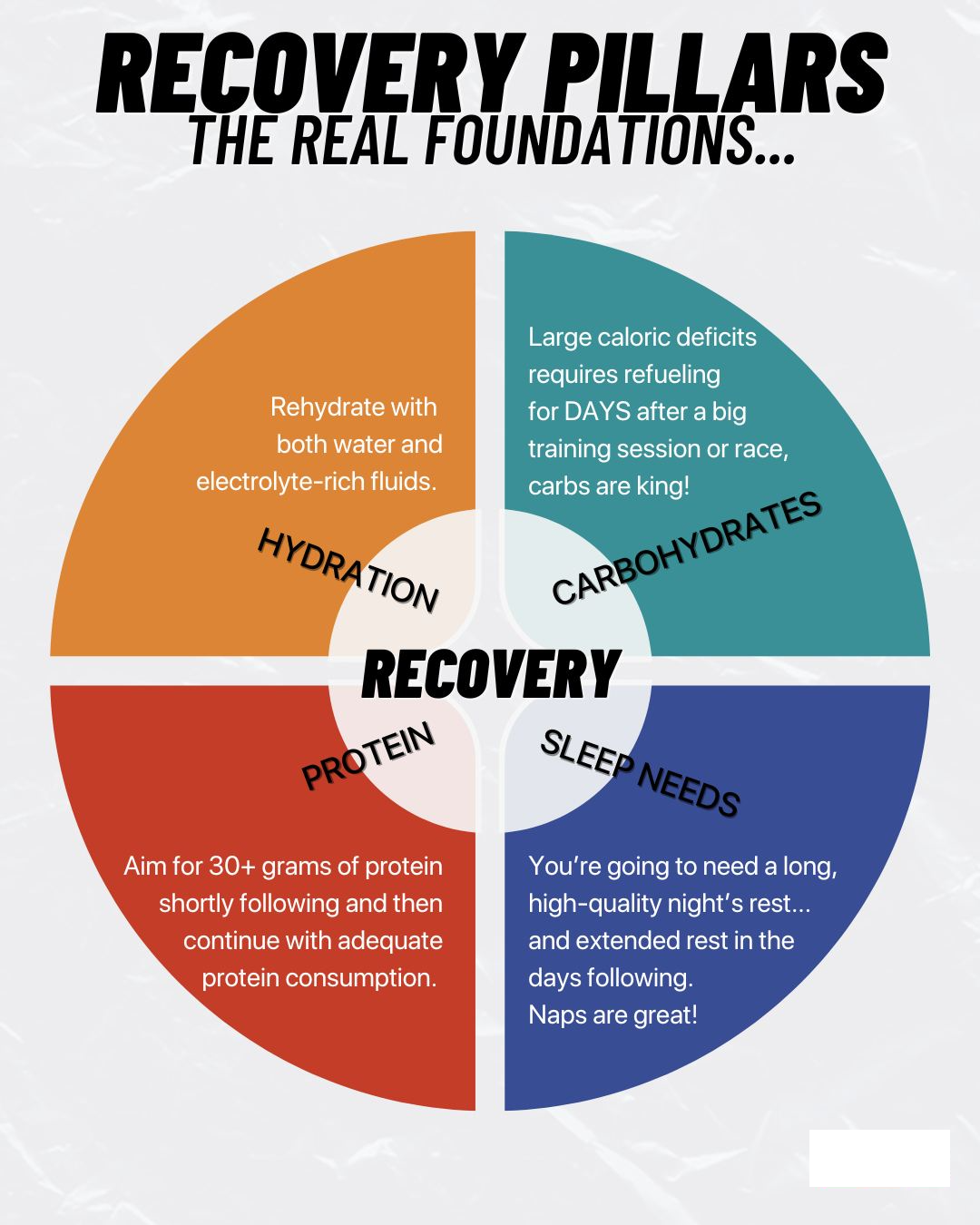
Outside of a specific race, recovery breaks down into three components that work together: sport-specific recovery (planned breaks from training itself), lifestyle recovery (the habits that support the body between sessions), and modalities (purchased or added extras). Start with the right recipe, add quality ingredients, and a little extra flavor produces the result you're after — skip any one piece and the other two can't fully compensate.
- Season planning: breaks in- and post-season
- Within blocks: a few days to a week of lower stress
- Lower-stress and optional sessions
- Rest days — a walk, restorative movement
- Sleep — foundational, non-negotiable
- Nutrition: quality, quantity, and timing
- Fueling around sessions
- Naps and meditation
- Foam rolling, 2–3x/week
- Massage, bodywork, or ART
- Chiropractic, physical, or movement therapy
- Heat (sauna, steam, hot tub); ice only for acute injury
A key concept underneath all of it: go easy on easy days, go hard on hard days, and avoid the gray zone in between. “Hardish” efforts on recovery days rack up fatigue without producing a training effect worth the cost.
Recovery weeks: what actually works during training
Not every athlete needs a formal recovery week — life tends to hand out breaks in the normal 7-, 10-, or 14-day training flow whether you plan them or not. But for athletes and coaches who do build them in deliberately, the common mistake is treating “recovery” as simply “less” across the board: less swimming, less biking, less running, less everything, in whatever proportion feels good that day. The result is often finishing the week more tired than it started, or feeling great during the week and losing fitness the moment real work returns.
The physiology explains why: training volume decays slowly, but training frequency decays fast. Cut volume in half for a week and the aerobic engine barely notices. Drop the number of sessions instead — five runs down to two, for instance — and neuromuscular pattern is lost faster than fitness is. The legs forget how to run before the heart forgets how to pump.
In practice, that means protecting the number of sessions and cutting their size: the same number of swims and rides, just shorter and a notch easier; the same running frequency at half the mileage and an easy pace. One short block of race-pace or threshold work — a pilot light, not a burner — keeps the top end of the engine warm without asking it to train. A workable starting ratio for many athletes: total training hours down 40–50%, total sessions down by roughly one, with small doses of intensity still present. Get that ratio backwards — keeping the volume but skipping the sessions — and the week ends with an athlete who's rested, but rusty.
Know when you're under-recovered
The warning signs show up across several categories at once, not just one. Sleep: broken sleep, night sweats, waking up already tired. Performance: elevated perceived effort at a normal heart rate, an inability to access top-end power or speed. Body: sore or tender muscles, large swings in body composition, frequent illness or injury, changes in appetite. Mindset: declining motivation, reduced enjoyment, apathy. Left unaddressed, these can progress to performance decline, hormonal imbalance, suppressed immune function, and increased injury risk.
If you track heart rate variability (HRV) or resting heart rate, the useful signal is the trend, not any single morning's number. A case comparison of elite triathletes found that HRV trending downward over a rolling multi-day average — not one off night — tracked closely with an athlete's progression toward non-functional overreaching, while resting heart rate trending upward over that same window showed the same pattern; the athlete whose HRV stayed stable did not show these warning signs (Plews et al., 2012). A single low reading is noise. A multi-day slide in HRV alongside a climbing resting heart rate is signal.
A few habits keep most athletes out of that deeper end of the spectrum: a Sunday sit-down to look honestly at the week ahead and adjust the plan before it becomes a problem, remembering that a single session doesn't make a season, staying aware of the difference between normal fatigue and something building toward overreaching, and simply having the courage to accept that rest is necessary rather than a sign of weakness.
Train with purpose
Recovery isn't a life hack, a shortcut, or an excuse to skip the work — the work still has to happen. What recovery does is allow that work to actually turn into fitness instead of accumulated fatigue. The goal is simple to state: arrive at race day fit, fresh, and fast, and string together your training blocks without interruption from burnout or injury. Fitness is rarely the limiter on race day. Recovery usually is.
References
Gabbett, T. J. (2016). The training-injury prevention paradox: should athletes be training smarter and harder? British Journal of Sports Medicine, 50(5), 273–280.
Meeusen, R., Duclos, M., Foster, C., Fry, A., Gleeson, M., Nieman, D., Raglin, J., Rietjens, G., Steinacker, J., & Urhausen, A. (2013). Prevention, diagnosis, and treatment of the overtraining syndrome: Joint consensus statement of the European College of Sport Science and the American College of Sports Medicine. Medicine & Science in Sports & Exercise, 45(1), 186–205.
Mueller, S. M., Knechtle, P., Knechtle, B., & Toigo, M. (2015). An Ironman triathlon reduces neuromuscular performance due to impaired force transmission and reduced leg stiffness. European Journal of Applied Physiology, 115(4), 795–802.
Mujika, I., & Padilla, S. (2000). Detraining: loss of training-induced physiological and performance adaptations. Part I: short term insufficient training stimulus. Sports Medicine, 30(2), 79–87.
Neubauer, O., König, D., & Wagner, K. H. (2008). Recovery after an Ironman triathlon: sustained inflammatory responses and muscular stress. European Journal of Applied Physiology, 104(3), 417–426.
Plews, D. J., Laursen, P. B., Kilding, A. E., & Buchheit, M. (2012). Heart rate variability in elite triathletes, is variation in variability the key to effective training? A case comparison. European Journal of Applied Physiology, 112(11), 3729–3741.