The Female endurance athlete
“Women are not small men”
-Dr. Stacy Sims
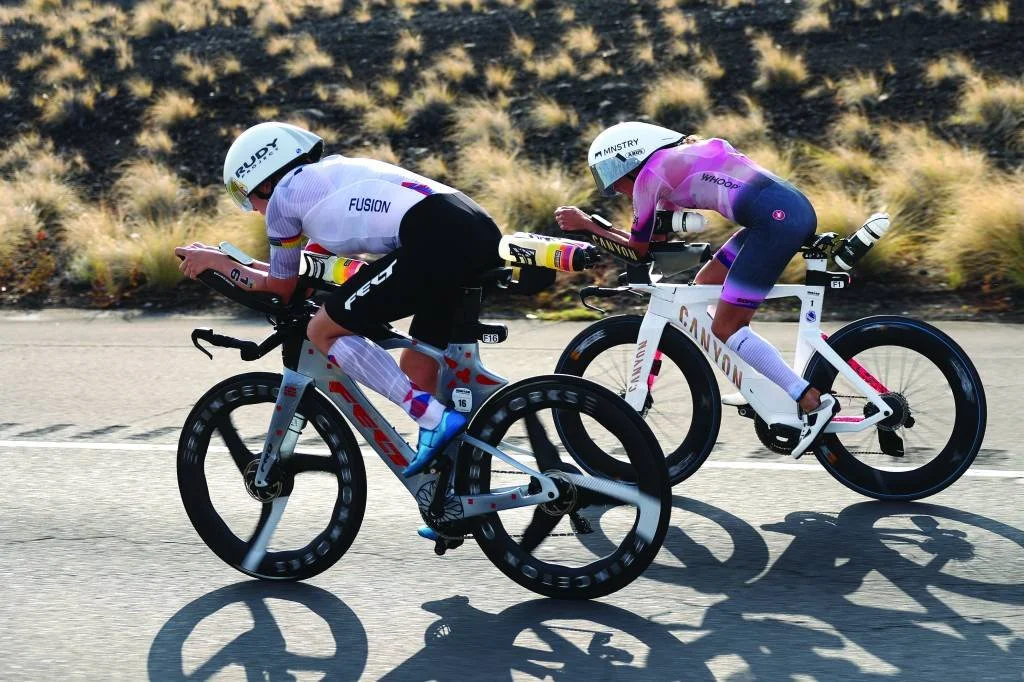
What does research say about the female endurance athlete — energy, health, and performance in the bigger picture
For most of sport science history, endurance research was done on men and then applied to everyone. Training zones, fueling guidelines, heat protocols — much of it was built on male data and handed to women with a smaller number attached. Women are not just small men.
That has changed quickly. We now know female athletes differ in how they use fuel, how they handle heat, how they fatigue, and how their bodies signal that something is wrong. We also know that women are not one group. Two athletes of the same age, sex, and fitness can respond very differently to the same block of training.
Whether you are new to multisport or chasing a qualifying slot, this is what the current evidence says — and why the most important idea in female athlete research is not the menstrual cycle. It is energy.
Health and performance are the same priority
Athletes often treat health as something to protect and performance as something to chase, as if one comes at the expense of the other. The research says otherwise. The same things that keep you healthy — enough fuel, enough recovery, bones that can handle impact, hormones that function normally — are the things that let you absorb training and race well.
Most athletes train hard. Few train right. Training right starts with making sure your body has what it needs to adapt to the work.
Energy availability: the foundation of everything
Energy availability is the fuel left over for your body to run itself after training has taken its share. That leftover energy covers recovery, hormone production, bone building, immune function, and adaptation. When it falls too low, your body starts rationing, and the systems it considers optional are the first to go.
Think of it as your body's operating budget. Training is a fixed expense. Whatever is left pays for recovery, hormones, bone, and immune health.
You can eat what feels like a lot and still come up short. A big training week, a double session, or a long ride without fueling can drain the budget even when meals look normal.
Low energy availability (LEA) rarely comes from one cause. It can come from high training volume, from not fueling sessions, from busy days with skipped meals, from deliberate restriction, or from trying to change body weight or composition during a training block. For college athletes juggling classes, practice, and a dining hall schedule, unintentional underfueling is far more common than intentional dieting.
Not every dip is harmful. The 2023 International Olympic Committee consensus describes LEA as a spectrum: short, mild shortfalls — a hard race day, a travel day — are usually adaptable and benign. The problem is LEA that is prolonged or severe. The same consensus highlights that chronically low carbohydrate intake adds to the damage (Mountjoy et al., 2023).
REDs: when the shortfall becomes a problem
When problematic LEA continues, it can lead to Relative Energy Deficiency in Sport, now written as REDs. REDs is not a weight issue or a body-composition issue. It is a whole-body issue that can affect hormones, metabolism, bone, the immune system, the heart and blood vessels, mood, and reproductive function — and it affects male athletes as well as female athletes (Mountjoy et al., 2023).
The performance cost is real: poorer recovery, reduced training adaptation, more illness, more injuries, and performance that stalls or slides no matter how hard you work. You cannot consistently outperform inadequate fueling.
Fatigue that does not lift with rest. Repeated colds or illness. Poor recovery between sessions. Performance that plateaus or declines despite consistent training. Recurrent injuries, stress reactions, or stress fractures. Missed, irregular, or stopped periods.
For male athletes, low libido, persistent low energy, and recurrent bone injuries are the equivalent signals.
Your coach can help you spot the pattern. A diagnosis belongs to a qualified healthcare professional.
Bone health: the long game
Bone is one of the clearest places where energy availability shows up. Low energy availability is associated with a higher risk of bone stress injuries and fractures, and REDs is more common in female athletes than male athletes (Mountjoy et al., 2023). Bone stress injuries are not bad luck. They are often a signal.
• Recurring bone pain, especially in the shin, foot, or hip, should be evaluated rather than trained through.
• More than one stress injury warrants a closer look at fueling, not just training load or shoes.
• Bone built in your teens and twenties supports decades of running, riding, and racing. Fueling now is an investment in the next thirty years of sport.
Your menstrual cycle: a health signal first
If you menstruate, your cycle is one of the most useful pieces of health information you have. A regular cycle is a sign that your body has enough energy to run its non-essential systems. A missed or disappearing period is a signal, not a side effect of being fit.
What about the cycle and performance? Here the evidence is much smaller than social media suggests. The largest analysis found performance may be only trivially lower in the first days of a period, based on low-quality evidence that could not support training guidelines (McNulty et al., 2020). A 2025 review restricted to the most rigorous studies found few phase effects and cautioned against firm conclusions either way (Schlie et al., 2025).
What is real is how individual athletes feel. In a study of 6,812 exercising women, participants reported an average of 11 cycle-related symptoms, with fatigue, mood changes, and cramps among the most common, and more symptoms meant more missed training (Bruinvels et al., 2021). Some athletes notice big changes. Others notice almost none.
There is no strong evidence for rebuilding your training around cycle phases. If a symptom regularly affects a key session, tell your coach and we will adjust around your pattern.
Tracking should make things clearer, not add stress. The goal is understanding, not over-monitoring.
Fueling: same principles, individual numbers
Women do use fuel differently. At the same relative intensity, female athletes tend to burn proportionally more fat and spare more carbohydrate. That does not mean women need less fuel or separate rules. A 2023 audit of the carbohydrate research found too few well-controlled female studies to justify female-specific or cycle-phase-specific carbohydrate guidelines (Kuikman et al., 2023). Resting metabolism does rise slightly in the second half of the cycle, but recent estimates put it at roughly 30 to 120 kcal per day — about a snack (Hurtová et al., 2026).
• Fuel the work. Scale carbohydrate to session length and intensity, and practice race fueling in training.
• Use body-weight-based targets, not a teammate's numbers. Our Three Levers approach manages carbohydrate, fluid, and sodium separately because every athlete needs a different mix.
• Lighter is not automatically faster. Chasing weight loss during a training block is the most common route into low energy availability.
• If food, fueling, or body image feels stressful, say so. Our support team includes a registered dietitian and sports psychologist.
Heat: a real sex difference to plan for
Heat is one of the areas where female physiology clearly differs. Women generally sweat less than men at high workloads, and after ovulation resting core temperature rises by roughly 0.3 to 0.5°C, which also raises the temperature at which sweating kicks in. For trained athletes, though, humidity and pacing still matter more than cycle phase.
Heat acclimation works for women. A 2025 study using a 10-day protocol found males and females improved core temperature and heart rate by a similar amount, but sweat rate adapted more slowly and less in women, and women reported higher perceived exertion along the way (Giersch et al., 2025).
Plan 10 to 14 days of heat exposure rather than a 5-day crash block, and keep intensity controlled while sessions feel harder.
Fuel and hydrate through the block. Heat raises energy and fluid demands, and a heat block is a common place for an unnoticed energy shortfall.
Fatigue and durability
Persistent fatigue is one of the most common early signs that energy or recovery is falling short, so it deserves attention rather than toughness. At the same time, there is good news. Across endurance running research, women tend to show less neuromuscular fatigue after long efforts and pace more evenly than men (Besson et al., 2022). Durability is a genuine strength to build on — as long as the fuel is there to support it.
Through every life stage
Athletes' needs change over time, from the college years through perimenopause and beyond. A 2025 survey of 187 female endurance athletes aged 40 to 60 found menopausal symptoms were as common in highly active women as in the general population, with sleep problems, joint and muscle discomfort, and exhaustion most often felt to affect training (Hamilton et al., 2025). Your plan should evolve with you — usually with more attention to recovery, sleep, and strength work.
Common myths, corrected
Myth: missing periods is normal for endurance athletes. Reality: it is a signal of low energy availability that warrants attention.
Myth: lighter is always faster. Reality: restriction impairs both health and performance.
Myth: REDs is only a women's issue. Reality: it affects athletes of any sex.
Myth: all women respond the same way to training. Reality: individual variability is large.
Myth: you must change your training every week of your cycle. Reality: the evidence does not support rigid cycle-based rules.
How we use this at Catalyst Endurance Coaching
Our job is to listen, observe, educate, and refer you to the right professional when something needs a medical answer. We do not diagnose, and your health information stays private.
• Your daily check-ins feed The Signal, our readiness framework, alongside heart rate variability, resting heart rate, and training load.
• We look at trends over weeks, not single bad days.
• If a pattern points to underfueling, recurring injury, or a menstrual change, we will talk with you and help you find the right support.
• You decide what you share. An open conversation is always better than a silent struggle.
Key takeaways
1. Women are not just small men, and no two women are the same. Individual attention beats group averages.
2. Energy availability is the foundation. Underfueling undermines health and performance in every athlete.
3. REDs is a whole-body problem that affects both women and men. Know the warning signs.
4. Your menstrual cycle is a health signal first. Missed periods need attention; cycle-based training rules do not.
5. Heat, fueling, fatigue, and life stage all deserve individualized planning — and an honest conversation with your coach.
6. Suggested readings- Roar and Next Level by Stacy Sims, PhD
This article is for education only and is not medical advice. If you have concerns about your menstrual health, bone health, or fueling, please speak with a qualified healthcare professional.
References
Besson T, Macchi R, Rossi J, et al. Sex differences in endurance running. Sports Medicine. 2022;52(6):1235–1257.
Bruinvels G, Goldsmith E, Blagrove R, et al. Prevalence and frequency of menstrual cycle symptoms are associated with availability to train and compete: a study of 6812 exercising women recruited using the Strava exercise app. British Journal of Sports Medicine. 2021;55(8):438–443.
Giersch GEW, Greenfield AM, Brazelton SC, et al. Distinct physiological responses to heat acclimation in males and females lead to similar thermal adaptations in both sexes. Journal of Applied Physiology. 2025;139(3):863–872.
Hamilton HM, Yarish NM, Heron KE. Frequency and perceived influence of menopausal symptoms on training and performance in female endurance athletes. PLOS One. 2025;20(12):e0335738.
Hurtová A, Gimunová M, Beníčková M. Resting metabolic rate fluctuations across the menstrual cycle: a systematic review. Frontiers in Physiology. 2026;17. doi:10.3389/fphys.2026.1778735.
Kuikman MA, Smith ES, McKay AKA, et al. Fueling the female athlete: auditing her representation in studies of acute carbohydrate intake for exercise. Medicine & Science in Sports & Exercise. 2023;55(3):569–580.
McNulty KL, Elliott-Sale KJ, Dolan E, et al. The effects of menstrual cycle phase on exercise performance in eumenorrheic women: a systematic review and meta-analysis. Sports Medicine. 2020;50(10):1813–1827.
Mountjoy M, Ackerman KE, Bailey DM, et al. 2023 International Olympic Committee's (IOC) consensus statement on Relative Energy Deficiency in Sport (REDs). British Journal of Sports Medicine. 2023;57(17):1073–1097.
Schlie J, Krassowski V, Schmidt A. Effects of menstrual cycle phases on athletic performance and related physiological outcomes: a systematic review of studies using high methodological standards. Journal of Applied Physiology. 2025. doi:10.1152/japplphysiol.00223.2025.