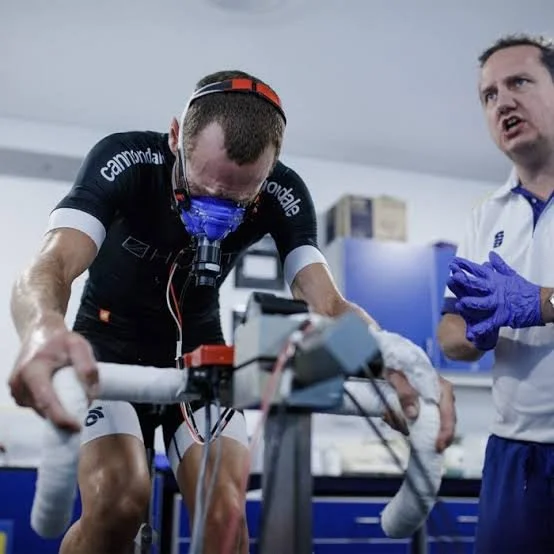
Endurance coaching has always leaned on science. What's different now is the speed. A paper published on Monday becomes a podcast talking point by Wednesday and a "new rule" on your Saturday group ride. Some of it deserves to change how you train. A lot of it doesn't.
IRONMAN U's current coach recertification opens its emerging-science module with the right question. It isn't "what's the newest research?" It's "which developments should actually change how we coach?" This post takes that framework, expands each area with the current literature — including several papers published in 2025 and 2026 — and translates it into what we do with Catalyst athletes.
The big shift: from capacity to support
Ten years ago, most coaching conversations orbited four variables: VO₂max, lactate threshold, training volume, and intensity distribution. Those still matter. The classic model of the endurance champion is built on VO₂max, the fraction of it you can sustain, and economy [1].
What has changed is everything around them. Today's conversations include fuel availability, carbohydrate intake, gut training, durability, heat, female athlete physiology, energy availability, and recovery. Notice the pattern — most of the meaningful progress isn't about the training itself. It's about the athlete's ability to support, absorb, and express that training on race day.
The Catalyst lens
Endurance performance isn't built on guesswork — it's built on precision. For each development below we ask three things: what changed, what the evidence actually says now, and how it shows up in an athlete's plan.
1. The fueling revolution
What changed. For years the standard advice for long events was 30–60 g of carbohydrate per hour, extended to roughly 90 g/h for events beyond 2.5 hours when glucose and fructose are combined so they can use separate gut transporters [2, 3]. Field data from IRONMAN racing showed some athletes taking in up to ~120 g/h well before labs tested those doses [4].
What the evidence says now. Controlled studies confirm that 120 g/h raises exogenous carbohydrate oxidation above what 90 g/h achieves, and that drinks, gels, and chews deliver comparable oxidation at that dose [5, 6]. In elite marathoners, 120 g/h also lowered the oxygen cost of running compared with 60 g/h [7]. A 2026 review in the Journal of Nutrition argues the upper guideline could reasonably rise from 90 to 120 g/h for trained athletes [8].
Where it isn't settled. A 2026 current opinion in Sports Medicine pushes back. Higher intake doesn't spare more muscle glycogen, the share of ingested carbohydrate that actually gets oxidized falls as the dose climbs, and performance trials haven't shown a clear dose-response above ~90 g/h [5, 9, 10]. Individual variation is large: at an identical 120 g/h intake, participants in one study oxidized anywhere from roughly 78 to 114 g/h [6, 9]. A 2025 proof-of-concept study found that matching intake to each athlete's oxidation rate delivered similar carbohydrate use while eating about 28% less [11].
How we apply it
Fueling is a trained performance variable, not a race-morning decision. Most long-course athletes start at 60–90 g/h from a glucose-fructose blend and build toward ~90 g/h. We push beyond that only when the athlete's gut tolerance, race duration, and intensity justify it. Carbohydrate, fluid, and sodium are managed as three independent levers — sodium typically starts near 1,000 mg/h and is adjusted to the athlete's sweat profile.
2. Gut training goes mainstream
What changed. Gastrointestinal distress used to be treated as the tax you pay for racing long. It remains one of the most common problems in long-course competition, and it tracks closely with how much and how often athletes eat and drink [4].
What the evidence says now. The gut adapts. Two weeks of repeated carbohydrate challenges during running reduced GI symptoms and carbohydrate malabsorption [12, 13]. Training daily with high carbohydrate availability increased exogenous carbohydrate oxidation in cyclists, most likely through upregulated intestinal transporters [14]. The honest caveat: the evidence that gut training improves tolerance is stronger than the evidence that it raises your oxidation ceiling [9]. Jeukendrup's review remains the clearest practical framework [15].
How we apply it
Race fueling gets rehearsed like any key session. Starting 8–12 weeks out, long rides and brick runs at race intensity use race-day products at race-day timing, with the dose built in steps. Athletes log GI symptoms on a simple 0–10 scale, and at least a few sessions happen in the heat, because heat and intensity both reduce gut blood flow.
3. Durability becomes a performance variable
What changed. The traditional profile — VO₂max, thresholds, economy — is measured fresh. Researchers now recognize that those values drift downward across hours of work, and that how much they drift differs meaningfully between athletes [16]. Jones has argued that this resilience is an independent determinant of endurance performance alongside the classic three [17].
What the evidence says now. The field is tightening its definitions. Recent papers propose "durability" for the decline in performance outputs such as power or speed, and "physiological resilience" for changes in the underlying physiology [18]. There is not yet a standardized test, so protocols vary widely [19]. One practical finding stands out: carbohydrate intake during prolonged exercise blunts the drop in power at the moderate-to-heavy intensity transition [20] — fueling is a durability tool.
How we apply it
In a 70.3 or full, hours three through nine are raced on the physiology you have left, not your fresh test values. The athlete who slows the least can beat the athlete with the better lab numbers. We track aerobic decoupling in long sessions, place threshold efforts late in long rides to see what holds, and treat fueling and pacing discipline as the two biggest levers on fade.
4. Female athlete research expands
What changed. Women have been underrepresented in sport science for decades. An audit of leading journals found only about 6% of studies included women exclusively [21].
What the evidence says now. Research volume and quality are improving, with published standards for how to study women properly [22]. On the most-asked question, menstrual cycle phase, the meta-analytic picture is that average effects on performance are trivial but individual responses vary, and study quality has often been low [23]. The larger health story is energy availability: menstrual disruption is a clinical signal, not a normal cost of training [24].
How we apply it
We don't prescribe training by cycle phase from a generic template. We do track cycle and symptoms for athletes who want to, adjust individually when patterns show up in the data, and treat any change in cycle regularity as a conversation about fueling and load. Masters women navigating perimenopause get the same individual approach.
5. Heat adaptation gets systematic
What changed. Heat prep used to mean arriving early or suffering through it. Consensus guidance now describes structured protocols: sessions of at least 60 minutes in the heat, with most thermoregulatory adaptations — plasma volume expansion, earlier and greater sweating, lower heart rate and core temperature at a given workload — developing over about one to two weeks [25, 26].
What the evidence says now. Longer heat training blocks of three to five weeks have repeatedly increased hemoglobin mass in trained athletes by a few percent, and heat is now discussed as a possible substitute for altitude [27, 28]. The performance gains are smaller and less consistent than the blood changes, and adaptations fade within weeks unless a maintenance dose continues [28].
How we apply it
Heat is a performance intervention, not a survival strategy. For hot races we build a 10–14 day heat block ending before taper, using indoor sessions, extra layers, or post-session hot baths or sauna when outdoor heat isn't available. Some athletes also use periodic heat exposure during base as a training stimulus — always with hydration and safety guardrails.
6. REDs awareness grows
What changed. Conversations about endurance nutrition used to center on body composition and race weight. The 2023 IOC consensus statement reframed the issue as Relative Energy Deficiency in Sport (REDs), described its effects on health and performance in all athletes, and introduced a clinical assessment tool [24].
What the evidence says now. Low energy availability affects bone, hormones, immunity, metabolism, mood, recovery, and adaptation. Health and performance are not competing goals — they're the same goal viewed on different timelines [24].
How we apply it
Fueling adequacy comes first. Warning signs we watch for include bone stress injuries, persistent fatigue, frequent illness, menstrual changes, low libido, and performance that stalls despite consistent training. When they show up, the next step is a conversation and a referral to our registered dietitian or a physician — not a harder training block.
7. Recovery science matures
What changed. Recovery became an industry. The research became more nuanced: some tools have solid support, others are mostly marketing.
What the evidence says now. Sleep sits at the top of the evidence pyramid, with expert consensus recommendations for athletes [29]. Cold-water immersion helps short-term recovery of power and perceived soreness [30], but repeated use after strength sessions blunts long-term gains [31]. Massage and compression have the most consistent support for soreness and perceived fatigue [32]. Monitoring trends in heart rate variability can flag under-recovery before performance drops [33].
How we apply it
Fundamentals outperform technology: sleep, fueling, and sensible load progression first. Modalities are matched to the goal — cold water between race days or during a stage-style block, not after strength work in a build. The Signal, our readiness framework, reads HRV, resting heart rate, training stress balance, and aerobic decoupling as trends alongside how the athlete says they feel.
8. Evidence-informed practice becomes the standard
This may be the most important cultural shift. The old model was experience-driven coaching. The modern model is experience informed by evidence. A BMJ Open analysis of sports performance products found that most marketing claims rested on weak or absent evidence [34], and sport science researchers themselves have called for more rigor in how studies are designed and reported [35].
Evidence-informed practice doesn't require coaches to become researchers. It requires three habits: evaluate information critically, stay open to new evidence, and avoid dogma — in either direction.
The eight developments at a glance
What hasn't changed
For all the new science, the fundamentals are remarkably stable: consistency, progressive overload, recovery, communication, the athlete-coach relationship, and patience. The data backs that up. In a five-year study of elite track and field athletes, those who completed at least 80% of their planned training weeks had roughly seven times higher odds of achieving their performance goal [36]. Most breakthroughs still depend on consistent execution.
Science versus social media
Scientific progress is gradual, iterative, and nuanced. Social media trends are fast, simplified, and often overstated. The 120 g/h debate is a live example: one 2026 review makes a reasonable case for raising the ceiling [8], while another published the same year argues that blanket adoption isn't justified and individualization matters more [9]. Both are credible. Neither fits in a 30-second clip.
Coaches face two competing risks — rejecting new information, or accepting it uncritically. The professional standard sits between them: stay curious, stay skeptical, stay evidence-informed.
A five-question filter before changing anything
- Who was studied? Elite male cyclists in a lab are not a 52-year-old age-grouper in August humidity.
- What was measured — a mechanism or actual performance?
- How large is the effect, and has it been replicated by independent groups?
- What does it cost the athlete if we're wrong?
- Can we test it safely in this athlete's training before race day?
The bottom line
The best coaches don't chase every new study. They recognize when evidence has accumulated enough that practice should evolve. Fueling, gut training, durability, female athlete physiology, heat adaptation, and energy availability have crossed that line — they are no longer emerging topics, they are part of modern long-course coaching. The job is to apply them to the individual in front of you, without losing the fundamentals that have always worked.
If you want a plan built on current evidence and your own data — fueling, durability, heat, and all — that's exactly what we do.
Ready to train with precision?
Get a plan built on current science and your own data.
Schedule a Coach Consultation One on One CoachingReferences
1. Joyner MJ, Coyle EF. Endurance exercise performance: the physiology of champions. J Physiol. 2008;586(1):35–44.
2. Thomas DT, Erdman KA, Burke LM. Position of the Academy of Nutrition and Dietetics, Dietitians of Canada, and the American College of Sports Medicine: nutrition and athletic performance. J Acad Nutr Diet. 2016;116(3):501–528.
3. Jeukendrup A. A step towards personalized sports nutrition: carbohydrate intake during exercise. Sports Med. 2014;44(Suppl 1):S25–S33.
4. Pfeiffer B, Stellingwerff T, Hodgson AB, et al. Nutritional intake and gastrointestinal problems during competitive endurance events. Med Sci Sports Exerc. 2012;44(2):344–351.
5. Podlogar T, Bokal Š, Cirnski S, Wallis GA. Increased exogenous but unaltered endogenous carbohydrate oxidation with combined fructose-maltodextrin ingested at 120 g h−1 versus 90 g h−1 at different ratios. Eur J Appl Physiol. 2022;122:2393–2401.
6. Hearris MA, Pugh JN, Langan-Evans C, et al. 13C-glucose-fructose labeling reveals comparable exogenous CHO oxidation during exercise when consuming 120 g/h in fluid, gel, jelly chew, or coingestion. J Appl Physiol. 2022;132(6):1394–1406.
7. Ravikanti S, Silang KG, Martyn HJ, et al. 13C-labelled glucose-fructose show greater exogenous and whole-body CHO oxidation and lower O2 cost of running at 120 versus 60 and 90 g·h−1 in elite male marathoners. J Appl Physiol. 2025;139:1581–1595.
8. Morton JP, Fell JM, Gonzalez JT, et al. From metabolism to medals: contemporary perspectives and revisiting carbohydrate guidelines for fueling endurance athletes during exercise. J Nutr. 2026;156:101442.
9. Plews DJ, Booth PD, Krieger T, Maunder E. Fuelled or fooled? Examining the evidence and mechanisms behind ultra-high carbohydrate intake in endurance athletes. Sports Med. 2026. doi:10.1007/s40279-026-02462-z
10. Smith JW, Pascoe DD, Passe DH, et al. Curvilinear dose–response relationship of carbohydrate (0–120 g·h−1) and performance. Med Sci Sports Exerc. 2013;45(2):336–341.
11. Podlogar T, Cooper-Smith N, Gonzalez JT, Wallis GA. Personalised carbohydrate feeding during exercise based on exogenous glucose oxidation: a proof-of-concept study. Perform Nutr. 2025;1:2.
12. Costa RJS, Miall A, Khoo A, et al. Gut-training: the impact of two weeks repetitive gut-challenge during exercise on gastrointestinal status, glucose availability, fuel kinetics, and running performance. Appl Physiol Nutr Metab. 2017;42(5):547–557.
13. Miall A, Khoo A, Rauch C, et al. Two weeks of repetitive gut-challenge reduce exercise-associated gastrointestinal symptoms and malabsorption. Scand J Med Sci Sports. 2018;28(2):630–640.
14. Cox GR, Clark SA, Cox AJ, et al. Daily training with high carbohydrate availability increases exogenous carbohydrate oxidation during endurance cycling. J Appl Physiol. 2010;109(1):126–134.
15. Jeukendrup AE. Training the gut for athletes. Sports Med. 2017;47(Suppl 1):101–110.
16. Maunder E, Seiler S, Mildenhall MJ, Kilding AE, Plews DJ. The importance of 'durability' in the physiological profiling of endurance athletes. Sports Med. 2021;51(8):1619–1628.
17. Jones AM. The fourth dimension: physiological resilience as an independent determinant of endurance exercise performance. J Physiol. 2024;602(17):4113–4128.
18. Zanini M, Jones AM, Nybo L. Defining physiological resilience and durability in the context of endurance performance modeling. J Appl Physiol. 2025;139(6):1714–1715.
19. Hunter B, Maunder E, Jones AM, Gallo G, Muniz-Pumares D. Durability as an index of endurance exercise performance: methodological considerations. Exp Physiol. 2025;110:1612–1624.
20. Dudley-Rode H, Zinn C, Plews DJ, Charoensap T, Maunder E. Carbohydrate ingestion during prolonged exercise blunts the reduction in power output at the moderate-to-heavy intensity transition. Eur J Appl Physiol. 2025;125:1349–1359.
21. Cowley ES, Olenick AA, McNulty KL, Ross EZ. "Invisible sportswomen": the sex data gap in sport and exercise science research. Women Sport Phys Act J. 2021;29(2):146–151.
22. Elliott-Sale KJ, Minahan CL, de Jonge XAKJ, et al. Methodological considerations for studies in sport and exercise science with women as participants: a working guide for standards of practice for research on women. Sports Med. 2021;51(5):843–861.
23. McNulty KL, Elliott-Sale KJ, Dolan E, et al. The effects of menstrual cycle phase on exercise performance in eumenorrheic women: a systematic review and meta-analysis. Sports Med. 2020;50(10):1813–1827.
24. Mountjoy M, Ackerman KE, Bailey DM, et al. 2023 International Olympic Committee's (IOC) consensus statement on Relative Energy Deficiency in Sport (REDs). Br J Sports Med. 2023;57(17):1073–1097.
25. Racinais S, Alonso JM, Coutts AJ, et al. Consensus recommendations on training and competing in the heat. Br J Sports Med. 2015;49(18):1164–1173.
26. Périard JD, Eijsvogels TMH, Daanen HAM. Exercise under heat stress: thermoregulation, hydration, performance implications, and mitigation strategies. Physiol Rev. 2021;101(4):1873–1979.
27. Rønnestad BR, et al. Heat training efficiently increases and maintains hemoglobin mass and temperate endurance performance in elite cyclists. Med Sci Sports Exerc. 2022;54(9):1515–1526.
28. Lundby C, et al. Altitude or heat training to increase haemoglobin mass and endurance exercise performance in elite sport. J Physiol. 2025. doi:10.1113/JP287700
29. Walsh NP, Halson SL, Sargent C, et al. Sleep and the athlete: narrative review and 2021 expert consensus recommendations. Br J Sports Med. 2021;55(7):356–368.
30. Moore E, Fuller JT, Buckley JD, et al. Impact of cold-water immersion compared with passive recovery following a single bout of strenuous exercise on athletic performance in physically active participants: a systematic review with meta-analysis and meta-regression. Sports Med. 2022;52(7):1667–1688.
31. Roberts LA, Raastad T, Markworth JF, et al. Post-exercise cold water immersion attenuates acute anabolic signalling and long-term adaptations in muscle to strength training. J Physiol. 2015;593(18):4285–4301.
32. Dupuy O, Douzi W, Theurot D, Bosquet L, Dugué B. An evidence-based approach for choosing post-exercise recovery techniques to reduce markers of muscle damage, soreness, fatigue, and inflammation: a systematic review with meta-analysis. Front Physiol. 2018;9:403.
33. Plews DJ, Laursen PB, Kilding AE, Buchheit M. Heart rate variability in elite triathletes, is variation in variability the key to effective training? A case comparison. Eur J Appl Physiol. 2012;112(11):3729–3741.
34. Heneghan C, Howick J, O'Neill B, et al. The evidence underpinning sports performance products: a systematic assessment. BMJ Open. 2012;2(4):e001702.
35. Halperin I, Vigotsky AD, Foster C, Pyne DB. Strengthening the practice of exercise and sport-science research. Int J Sports Physiol Perform. 2018;13(2):127–134.
36. Raysmith BP, Drew MK. Performance success or failure is influenced by weeks lost to injury and illness in elite Australian track and field athletes: a 5-year prospective study. J Sci Med Sport. 2016;19(10):778–783.