The Brick Run — Pacing the First few Miles Off the Bike
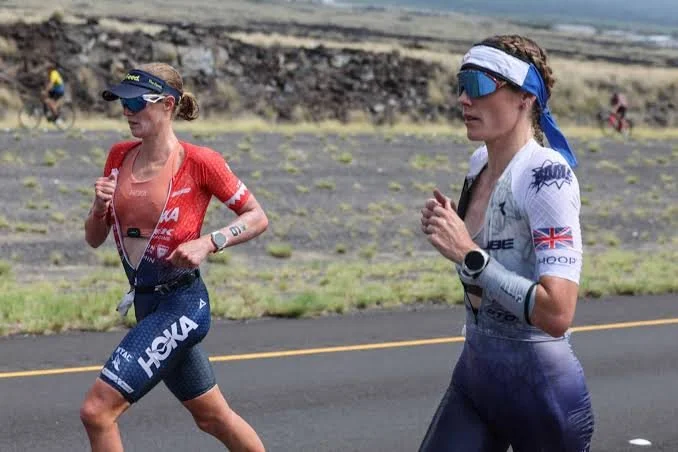
Your legs feel like they belong to someone else. That first quarter mile off the bike — the one where your stride feels foreign, your cadence won't cooperate, and pace that felt easy in training suddenly feels like your a donkey dipped in cement — is one of the strangest sensations in endurance sport.
Most athletes interpret it one of two ways. Either they panic and force the pace to "prove" their fitness, burning matches they need for the miles ahead. Or they assume something is wrong — that they under-trained, under-fueled, or rode too hard — when in fact what they are feeling is a well-documented, measurable phenomenon that happens to nearly every triathlete at every level, from first-timers to Kona qualifiers.
This post covers what is actually happening in your body in that first mile, why pace is the least trustworthy metric you have in that window, how to train specifically for the transition, and how the picture changes across sprint through full Ironman distance.
What's actually happening — "T2 sluggishness"
In 2022, researchers at the University of Konstanz gave this sensation a name: T2 sluggishness. Using motion-tracking sensors, Weich and colleagues quantified a measurable disruption in running gait that occurs specifically in the transition from cycling to running — distinct from general fatigue, and present at every level of triathlete they studied.
The mechanism is straightforward once you understand it. Cycling and running use many of the same major muscle groups — quads, hamstrings, glutes, calves — but activate them in almost opposite ways. On the bike, force is produced through a confined range of motion, largely concentric, with the hip and knee moving through a fixed, seated pattern for hours. Running requires the same muscles to produce elastic, eccentric force through a much wider range of motion, with the added demand of impact absorption and postural control that cycling never asks for.
When you dismount and start running, your neuromuscular system has to reorganize that entire motor pattern in a matter of seconds. USA Triathlon's coaching education describes this directly: differences in blood flow, muscle fiber recruitment, and nerve activation between the two disciplines force a physiological and biomechanical shift at every transition — one that produces the classic sensation of running on numb, foreign legs.
What the Research Shows
Weich et al. (2022) found measurable disruption in running gait in the initial minutes after cycling — cadence drops, vertical oscillation increases, and stride pattern becomes less efficient. This is not fatigue and it is not a fitness problem. It is a neuromuscular coordination issue, and it responds to specific training.
Why pace lies to you in the first mile
If you have read our post on the Holy Trinity of triathlon racing, you already know the core principle: never anchor your race to a single metric. RPE, heart rate, and pace/power all have to be read together — and when one is out of alignment with the others, that is the signal to adjust.
The first mile off the bike is the single best example of why that principle exists. Pace is the least trustworthy of the three metrics in this window, because your gait is measurably disrupted independent of your fitness, your effort, or how well you executed the bike leg. An athlete who is perfectly fit and perfectly paced can still see a 30 to 45 second per mile pace disruption in the first half mile off the bike, purely from T2 sluggishness resolving itself.
This is exactly why heart rate and RPE matter more in this window than they do anywhere else in the race. Your cardiovascular system is not confused — it has a clear read on your effort even while your legs are still reorganizing themselves. If you chase goal pace by feel alone in that first quarter mile, you are very likely running harder than you think, because your stride is inefficient and your brain is compensating by pushing effort up to hit a number that your body is not ready to hit efficiently yet.
The Holy Trinity, Applied to T2
One metric will lie to you here. Use all three.
Pace is compromised by gait disruption that has nothing to do with fitness. Heart rate and RPE are your honest read on effort in the first few mile. If pace feels off but HR and RPE are both in range, that is T2 sluggishness resolving — not a sign to force the issue. Read the full Holy Trinity framework on the CEC blog for the complete picture.
Getting it wrong looks different at every distance — and so does getting it right
How you handle the first mile off the bike is not the same conversation at every distance, and treating it as one conversation is where a lot of athletes get into trouble.
Sprint — there is nowhere to hide
At sprint distance, the honest truth is you do not have the luxury of a long settle-in window. The run is short, the effort is high from gun to tape, and to some degree you simply have to endure the discomfort of T2 sluggishness while still running hard. The good news is the disruption is brief — usually resolved within 400 to 600 meters — and sprint-distance athletes who brick train specifically for a fast transition can compress that window significantly. This is one of the few places in triathlon where "grit through it" is legitimately part of the strategy, because the race is over before a longer settle period would even be relevant.
Olympic — a short, deliberate window
At Olympic distance you have slightly more room to work with. The first 400 to 800 meters should be run by feel and heart rate more than by pace, with the expectation that your legs will come around by the first kilometer. Athletes who try to hit goal pace immediately off the bike at Olympic distance are the ones who blow up in the second half — the effort required to force pace through disrupted gait costs more than the time saved.
70.3 — patience pays a real dividend
At half-iron distance, the run is long enough that the first quarter to half mile genuinely does not matter for your finishing time — but the decision you make in that window absolutely does. Run the first 800 meters to a kilometer at a controlled effort, let heart rate and RPE be your primary guide, and allow pace to arrive on its own as your gait normalizes. Athletes who are patient here consistently run faster back halves than athletes who force early pace, because they are not fighting inefficient mechanics on top of accumulated bike fatigue.
Full Ironman — this is where the real damage happens
This is the distance where the mistake is most costly and most common. The pattern is familiar to every long-course coach: an athlete comes off the bike feeling surprisingly good, pushes the first few miles of the marathon harder than planned because it feels sustainable, and is walking by mile 18. The math is unforgiving — a marathon gives you 26.2 miles to pay for a mistake made in the first three, and heat, accumulated glycogen depletion, and cardiovascular drift all compound whatever pacing error you made early.
The rule for full-distance racing is simple and worth repeating to every athlete before their race: going out too hard in the first few miles of the Ironman run does not just cost you those miles — it costs you the ability to run at all later. The correct approach is an extended settle window of the first mile to mile and a half, run conservatively by RPE and heart rate, with pace allowed to find itself gradually. The athletes who walk at mile 18 are, almost without exception, the athletes who were still chasing a pace number in mile 2 that their legs and cardiovascular system were not ready to sustain.
| Distance | Settle Window | Primary Guide Early | Common Mistake |
|---|---|---|---|
| Sprint | 400 – 600m | RPE, brief endurance of discomfort | Rare — race is short enough to self-correct |
| Olympic | 400 – 800m | HR + RPE, pace secondary | Forcing goal pace before gait normalizes |
| 70.3 | 800m – 1K | HR + RPE, patient pace build | Racing the first mile instead of the back half |
| Full Ironman | 1 – 1.5 miles | RPE + HR almost exclusively | "Feels good" early pace that empties the tank by mile 18 |
How to train the transition — frequency and duration both matter
The adaptation you are chasing with brick training is neuromuscular, not cardiovascular. Your aerobic system is rarely the bottleneck at T2 — your motor pattern is. That distinction changes how you should be structuring brick sessions across a training block.
Short, frequent bricks build the transition skill
Research and my coaching experience both point the same direction: the specific stimulus that trains T2 sluggishness away is repeated exposure to the transition itself, not volume. A 45-minute bike ride followed by a 15-minute run at race effort is more specific training for the transition than an occasional 3-hour ride followed by a 45-minute survival shuffle. Frequency of the stimulus matters more than the length of the run that follows it. For most athletes, one short, focused transition brick per week — even a modest one — does more for T2 adaptation than a single long brick every few weeks.
There is also a specific technique worth building into the final minutes of every bike leg, whether in training or racing: in the last 5 to 10 minutes before dismount, shift to a lighter gear and raise cadence above 90 RPM. Athletes who maintain a higher cycling cadence into the dismount consistently show less gait disruption in the first minutes of the run than those who push a heavy gear right to the line. This primes the neuromuscular system for the shift before you have even unclipped.
Cadence Priming
Final 5–10 minutes of every bike leg: shift to a lighter gear, raise cadence above 90 RPM. This is a free adaptation — it costs you nothing in bike power and measurably reduces T2 gait disruption on the run.
Long bricks still matter — especially for full distance
Short, frequent bricks build the physical skill of the transition. But they do not replace the value of the occasional long brick, particularly for athletes building toward 70.3 and full Ironman distance. A long brick — a substantial ride followed by a longish meaningful run— trains something that short bricks cannot: the mental capacity to keep executing a plan when your legs already feel heavy before the run even begins.
This matters most at full distance, where the athlete is not managing a fresh transition after a 45-minute ride but a transition after 5, 6, or more hours on the bike, often in accumulating heat and fatigue. The physical adaptation from short bricks handles the neuromuscular reorganization. The long brick is where an athlete builds the mental rehearsal for staying patient, trusting the plan, and executing pacing discipline when the temptation to either panic or force the pace is strongest. Both belong in a full-distance build — they are training two different systems, and skipping either one leaves a gap that shows up on race day.
| Brick Type | Primary Purpose | Best Distance Application |
|---|---|---|
| Short, frequent (weekly) | Neuromuscular adaptation — trains the motor pattern shift itself | All distances, especially sprint and Olympic |
| Cadence-primed finish | Reduces T2 gait disruption before it starts | All distances — build into every bike session |
| Long brick (periodic) | Mental rehearsal, pacing discipline under accumulated fatigue | Essential for 70.3 and full Ironman |
The first mile protocol — regardless of your distance
• Do not look at pace for the first portion of the run. Cover your pace field with tape if you have to. Run by feel and heart rate until your gait normalizes.
• Expect the discomfort — do not diagnose it. The foreign-leg feeling is normal and temporary. It is not a sign that something has gone wrong with your fitness or your fueling.
• Let cadence lead, not stride length. Focus on quick, light steps rather than reaching for your normal stride. Cadence recovers faster than full running mechanics — let it lead the process.
• Check RPE and heart rate, not the clock. If your effort feels controlled and your heart rate is in range, trust that over what the pace number says in the first quarter to full mile.
• Let pace arrive — don't chase it. By the time gait normalizes, pace typically settles into target range on its own. Forcing it early costs more than patience does.
One more variable — heat and humidity change all of this
It would be negligent to cover run pacing without addressing what heat does to every principle in this post. T2 sluggishness, settle windows, cadence — all of it still applies, but heat and humidity change the math underneath it, and the adjustment has to be planned before race day, not improvised during it.
The mechanism — and why it hits harder on the run than the bike
The same cardiovascular drift that affects bike pacing is more punishing on the run, because running produces significantly more metabolic heat per mile than cycling at an equivalent effort, and you no longer have airflow from bike speed helping you dissipate it. Heat and humidity force blood to be diverted from working muscle to skin for cooling, which raises heart rate at a given pace and reduces the muscle efficiency available to sustain that pace. Field data on marathon performance puts a number on this: roughly a 1.5–3% pace penalty for every 1°C rise in Wet Bulb Globe Temperature, or a 6–12% penalty for every 5°C increase above about 10°C (50°F) of ambient temperature. That is not a small adjustment — it is often the difference between a controlled back half and a walk to the finish.
Wet Bulb Globe Temperature (WBGT) — which combines air temperature, humidity, wind, and solar radiation into one number — is the gold standard researchers and race directors use to quantify heat stress, and it is what most race organizations use to set flag warnings or cancellation thresholds. You will not have a WBGT reading in your pocket on race day, but dew point is a close practical substitute and is available on any weather app. As a rule of thumb: dew points in the 60s should get your attention, and anything at or above 70°F is a signal to significantly revise your pacing plan before you start, not after you are already struggling.
Heat's cost — by the numbers
1.5–3%
pace penalty per 1°C rise in WBGT
6–12%
penalty per 5°C above 10°C (50°F)
70°F
dew point — revise your plan at or above this
+10–20s
per mile, per 5°F above 60°F
Why Slower Athletes Suffer More in Heat
A runner out on course for 5 hours accumulates far more cumulative thermal load than one finishing in 3, even at the same distance — because heat production keeps compounding for as long as you are moving. This is precisely why heat management matters more, not less, for age-group and back-of-pack athletes than it does for the pros at the front of the field.
Adjusting pace — build the discount in before you start
The single biggest mistake athletes make in hot conditions is starting the run at a pace built for a cool-weather race and waiting to see if the heat "affects them" before adjusting. By the time you feel the effect, you have already gone out too hard for the conditions — heart rate has already drifted and the damage is compounding. The correct approach is to build the adjustment into your target before the gun goes off. As a general guideline, for every 5°F above roughly 60°F, plan to add 10 to 20 seconds per mile to your goal pace, more at the upper end of that range if humidity is high or you are further back in the field with a longer expected finishing time.
This is also where the Holy Trinity becomes essential rather than optional. In heat, pace targets set in cool-weather training are not a reliable guide — RPE and heart rate become your primary instruments, with pace demoted to a secondary check. An effort that would be Zone 2 on a cool day may produce a Zone 3 heart rate response in significant heat at the exact same pace. Racing to a fixed pace number in those conditions means racing to a heart rate and effort level you cannot actually sustain for the distance in front of you.
Fueling and hydration — the adjustment compounds
The fueling section of this series , Race Day Fueling, already covered how heat slows gastric emptying and elevates sodium losses — on the run specifically, both effects intensify. Sodium losses at 86°F (30°C) can run as high as 1.2 to 2.1 grams per hour in heavy sweaters, well above what most athletes are taking in through a standard electrolyte strategy. This is the scenario where the CEC guidance to push sodium toward the upper end of your personal range, and to prioritize liquid carbohydrate sources over solids, matters most — a gut that is already working harder to manage heat stress has less capacity to also process solid fuel efficiently.
Practical adjustment: in hot conditions, increase fluid intake at every aid station rather than every other one, favor cold fluids when available since they help lower core temperature in addition to replacing volume, and do not skip ice — ice in a hat, down the front of a kit, or held against the neck and wrists is one of the simplest, most effective cooling tools available on a race course and costs you almost no time to use.
Race-Day Adjustment
In hot conditions: hit every aid station instead of every other one, favor cold fluids when available, and don't skip the ice. Ice in a hat, down the front of a kit, or held against the neck and wrists is one of the simplest, most effective cooling tools on a race course — and it costs you almost no time to use.
Walk breaks — a planned strategy, not a failure
This is the point most athletes resist hardest, and it is the one most worth making directly: in significant heat, a planned walk strategy is not a concession to weakness — it is frequently the faster overall strategy, and the data backs this up. Research on run-walk pacing shows that structured walk breaks reduce impact loading substantially per stride and allow periodic recovery at a much lower metabolic and thermal cost than continuous running, which preserves the ability to sustain effort across the full distance instead of decaying into a shuffle in the final miles.
Analysis of Ironman marathon splits backs this up directly: athletes who plan brief 30 to 60 second walks through the aid stations — particularly through roughly the first two-thirds of the marathon — consistently run the back half faster than athletes who resist walking on principle. The math is straightforward and worth saying plainly to your own athletes: a 45-second walk at each aid station costs you well under a minute across the day. Blowing up at mile 20 in the heat costs you 20 to 40 minutes, and often a great deal more. Of note, if you wait to start walking because you have to you have missed your window and will result in more walking than running as you continue your race.
Heat Walk-Break Protocol
Plan it before the gun goes off — not when you're already struggling
In conditions above roughly 75°F, build a walk break into every aid station from the start of the run, regardless of distance — 20–30 seconds at Olympic and 70.3, 30–60 seconds for full Ironman. Walk with posture and purpose, not a shuffle. Use the time to fuel, hydrate, and cool. This is a pre-race decision, not a mid-race negotiation with yourself.
One final point that ties this back to where we started: heat compounds T2 sluggishness rather than replacing it. An athlete coming off a hot bike leg is dealing with both the neuromuscular transition and an already-elevated core temperature and heart rate before the run even begins. The extended settle window recommended for 70.3 and full Ironman distance earlier in this post should be lengthened further in significant heat — this is not the day to fight your way to goal pace in the first mile. Read your heart rate, respect the conditions, and trust that a smart, heat-adjusted plan beats a stubborn one every time.
The run starts on the bike — and it starts twice
We said in the last post, The Bike Decides Everything, that the run does not start in T2 — it starts at mile one of the bike, in the pacing decisions that determine what you have left. That is still true. But there is a second start line, too: the physical and mental transition your body makes in the minutes after you rack the bike, one that is governed by different rules than the rest of the run.
T2 sluggishness is real, it is measurable, and it happens to everyone — but it is also trainable and predictable once you understand what is actually happening. The athletes who handle it best are not the ones with the least discomfort in that first mile. They are the ones who expect it, read their heart rate and RPE instead of a pace number that is temporarily lying to them, and trust that their legs will come back if they let the process unfold instead of forcing it.
Whatever your distance, whatever the conditions, the principle scales the same way: respect the settle window appropriate to your race, prime your cadence in the final minutes of the bike, adjust for heat before the gun goes off rather than during the run, and finally build both short and long bricks into your training so the transition stops being a mystery and becomes a rehearsed skill.
Work with a Coach
Want a run-off-the-bike strategy built for your distance?
The first mile off the bike is a skill, not a feeling you either have or don't. If you want a brick progression and race-day pacing plan built around your distance and your data, let's talk.
References
Bentley DJ, Millet GP, Vleck VE, McNaughton LR. Specific aspects of contemporary triathlon: implications for physiological analysis and performance. Sports Med. 2002;32(6):345–359.
Geddis T. The Holy Trinity of Triathlon Training and Racing. Catalyst Endurance Coaching Blog. catalystendurance.com.
Millet GP, Vleck VE. Physiological and biomechanical adaptations to the cycle to run transition in Olympic triathlon: review and practical recommendations for training. Br J Sports Med. 2000;34(5):384–390.
Rüst CA, Knechtle B, et al. Thermal and biomechanical responses of amateur, elite and World Cup athletes during a World Cup sprint triathlon in the heat. Sports Med. 2025.
Running Writings. Heat and humidity pace calculator for runners: adjusting marathon and long-run pace for temperature and dew point. apps.runningwritings.com.
USA Triathlon. How to Use Brick Workouts in Triathlon Training. usatriathlon.org.
Weich C, Barth V, Killer N, Vleck V, Erich J, Treiber T. Discovering the sluggishness of triathlon running — using the attractor method to quantify the impact of the bike-run transition. Front Sports Act Living. 2022;4:1065741. doi:10.3389/fspor.2022.1065741